
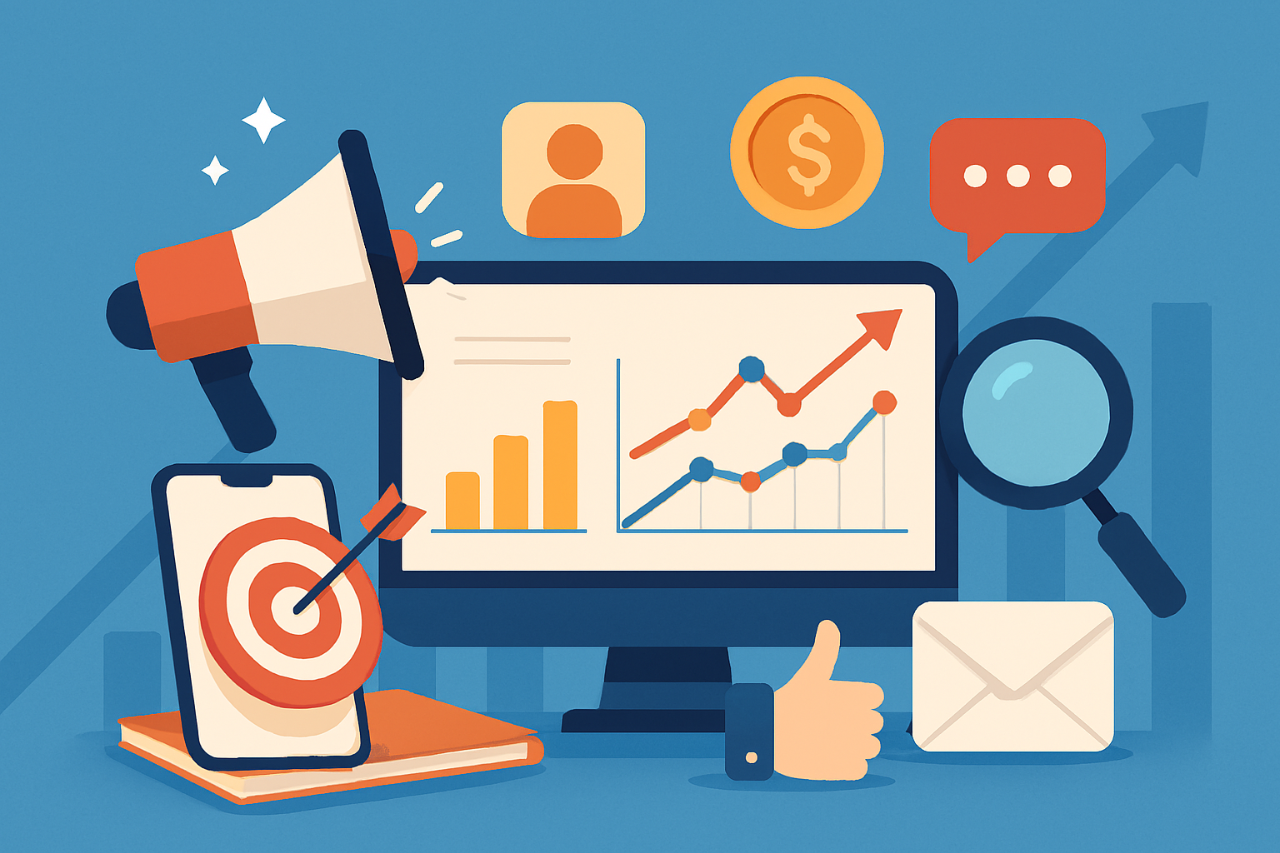
In today’s digital-first world, businesses grow, compete, and thrive on the internet. Whether you’re a small startup, an established brand, or a service-based company, digital marketing has become the most powerful tool to reach your audience, build trust, generate sales, and scale your business to new heights.
With billions of people online every day, digital marketing gives you the ability to promote your brand across multiple platforms—social media, search engines, websites, email, and more—with precision, strategy, and measurable results. It is no longer optional; digital marketing is essential for any business that wants to stay relevant and competitive in the modern market.
What Is Digital Marketing?
Digital marketing refers to all marketing efforts that use the internet or electronic devices to promote products, services, or brands. It includes a wide range of online strategies such as:
-
Search Engine Optimization (SEO)
-
Social Media Marketing (SMM)
-
Content Marketing
-
Email Marketing
-
Pay-Per-Click Advertising (PPC)
-
Affiliate Marketing
-
Video Marketing
-
Influencer Marketing
-
Website Optimization
-
Marketing Automation
These strategies help businesses connect with their audience, attract potential customers, and convert them into loyal clients.
Why Digital Marketing Matters Today
Digital marketing has transformed how businesses operate by providing opportunities that traditional marketing cannot match.
1. Reach a Global Audience
The internet removes all geographical boundaries. With the right strategy, your brand can reach customers across the world.
2. Cost-Effective Compared to Traditional Marketing
Running digital campaigns is far more affordable than TV ads, billboards, or print marketing. Even small businesses can compete with bigger brands through targeted online promotions.
3. Measurable Results
Digital marketing allows you to track:
-
Website traffic
-
Conversions
-
Clicks
-
Sales
-
Audience behavior
-
Engagement
This transparency helps you understand what works and improve your strategy.
4. Targeted Marketing
Using digital tools, you can reach the exact audience that needs your services based on:
-
Age
-
Gender
-
Interests
-
Location
-
Online activities
-
Behavior
This leads to higher conversions and better returns on investment.
5. Build Strong Customer Relationships
With tools like social media, email, and chat support, you can interact with your customers instantly and build trust over time.
Core Components of Digital Marketing
Digital marketing includes several interconnected strategies. Each plays a crucial role in strengthening your online presence.
1. Search Engine Optimization (SEO)
SEO is the process of improving your website’s visibility on search engines like Google. When customers search for something related to your business, SEO helps your site appear at the top of search results.
Effective SEO includes:
-
Keyword research
-
On-page optimization
-
High-quality content creation
-
Backlink building
-
Technical SEO
-
User experience improvement
A strong SEO strategy increases organic traffic, boosts credibility, and brings long-term growth.
2. Social Media Marketing (SMM)
Social media has become a digital marketplace where people connect, explore brands, and make buying decisions. Social media marketing involves using platforms like:
-
Facebook
-
Instagram
-
LinkedIn
-
TikTok
-
YouTube
-
Twitter
Businesses use social media to:
-
Build brand awareness
-
Promote products
-
Share content
-
Run ads
-
Engage with customers
-
Strengthen community
Consistent posting and targeted advertising can significantly increase reach and conversions.
3. Content Marketing
Content is the foundation of digital marketing. High-quality, valuable content helps attract and engage your audience.
Types of content include:
-
Blogs
-
Articles
-
Videos
-
Infographics
-
eBooks
-
Social media posts
-
Case studies
Content marketing helps establish authority, improve SEO, and build customer trust.
4. Pay-Per-Click Advertising (PPC)
PPC ads allow you to appear at the top of search engines or social media feeds instantly. You pay only when someone clicks on your ad.
Popular PPC platforms:
-
Google Ads
-
Facebook Ads
-
Instagram Ads
-
LinkedIn Ads
-
YouTube Ads
PPC is ideal for quick results, leads, and sales.
5. Email Marketing
Email marketing remains one of the most effective ways to reach customers directly. Businesses use email campaigns to:
-
Promote products
-
Share updates
-
Offer discounts
-
Nurture leads
-
Build relationships
With automation, emails can be personalized for each subscriber, increasing engagement and sales.
6. Website Optimization
Your website is the digital home of your business. An optimized website should be:
-
Fast
-
Mobile-friendly
-
Easy to navigate
-
SEO-friendly
-
Visually appealing
-
Clear in messaging
A good website improves user experience, increases conversions, and builds trust.
7. Video Marketing
Videos attract more attention than any other content type. They can demonstrate products, explain services, and tell brand stories effectively.
Platforms like YouTube, Facebook, Instagram Reels, and TikTok make video marketing essential for modern branding.
8. Influencer Marketing
Collaborating with influencers helps you reach their followers and gain instant credibility. It is especially effective in fashion, beauty, fitness, technology, and lifestyle industries.
The Benefits of a Strong Digital Marketing Strategy
A well-executed digital marketing plan can transform your business in many ways:
-
Increased brand awareness
-
Higher website traffic
-
More qualified leads
-
Better customer engagement
-
Improved credibility
-
Faster business growth
-
Higher revenue generation
-
Enhanced competitive advantage
Digital marketing ensures your business stays relevant, visible, and connected with your audience.
How Digital Marketing Works for Different Businesses
1. For Startups
Digital marketing helps startups gain visibility quickly without spending a fortune.
2. For Small Businesses
It helps local businesses attract nearby customers and build strong brand loyalty.
3. For E-commerce Brands
Digital marketing drives sales, traffic, and repeat purchases through targeted ads and retargeting.
4. For Service-Based Companies
It boosts trust, generates inquiries, and educates customers through high-quality content.
5. For Corporations
Digital marketing supports large-scale branding, global expansion, and product launches.
Trends Shaping the Future of Digital Marketing
The digital world is constantly evolving. Some key trends include:
-
AI-powered marketing
-
Voice search and smart assistants
-
Chatbots and conversational marketing
-
Influencer partnerships
-
Short-form video content
-
Personalized campaigns
-
Data-driven decision-making
Businesses that adapt to these trends stay ahead of the competition.
Conclusion: Digital Marketing Is the Future of Business Growth
Digital marketing is not just a trend—it is the foundation of modern business success. It gives companies the ability to reach the right audience, deliver powerful messages, and build lasting customer relationships. With the right digital strategy, your business can scale faster, compete stronger, and achieve long-term success.